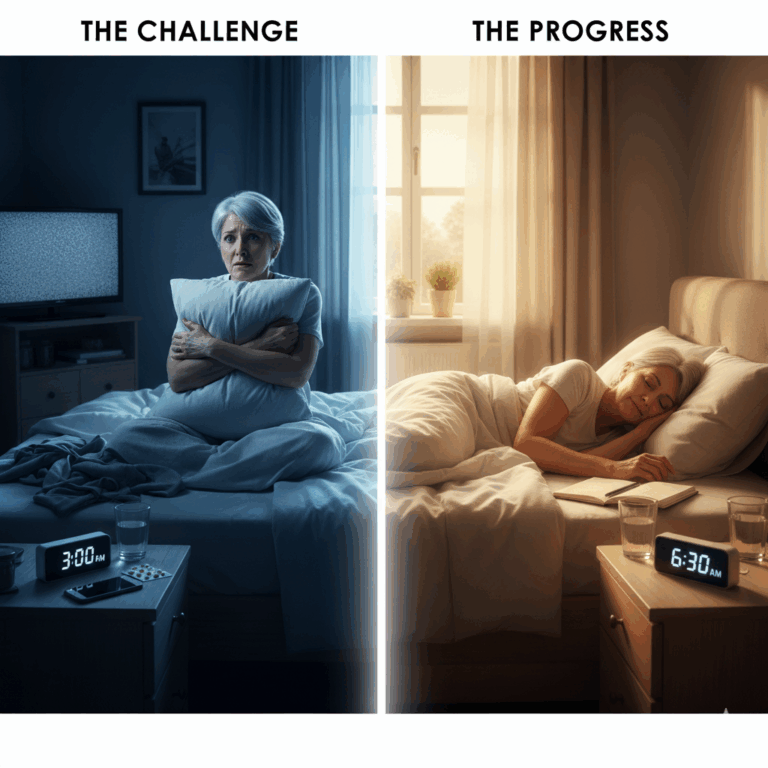
The Challenge
At 65, Emily had been an insomniac for as long as she could remember, with her sleep challenges intensifying after perimenopause. Annoyed that her family could sleep effortlessly, she felt perpetually tired during the day and often dozed off in front of the TV. Yet, she’d get a “second wind” in the evening and would be filled with anxiety about the coming night’s sleep. To compensate, she’d go to bed at 9 PM to give herself “more time” to fall asleep, only to lie awake for hours. When she woke up in the middle of the night, she would take half a sleeping pill to try to get back to sleep. After a bad night, she’d frequently hit the snooze button and change her alarm time in an effort to “catch up” on lost sleep. Emily’s attempts to manage her sleep, though well-intentioned, were actually making her insomnia worse.
The Progress
Emily experienced significant improvements in her sleep after completing our CBT-Insomnia program. She now falls asleep faster and no longer has prolonged nighttime awakenings. She feels her sleep quality has greatly improved and has the knowledge and tools to keep her sleep on track. Our program helps people like Emily recognize and correct common myths and behaviours about sleep, replacing counterproductive habits with effective strategies that lead to lasting change.
Learn more about CBT-insomnia courses with Dr Sarah Adams.